In recognition of African American Heritage Month, I am sharing a document that I received at The Evans Family Reunion, “The Journey With Albert Rush Evans.” It is based on oral histories recorded on cassette tapes by Mrs. Vera E. Evans McGruder, Dr. Claude D. Evans and Mrs. Elayne Owens Evans during the 1980’s. The group of family researchers traveled to Yoakum, Texas to look at the land area and find individuals who remembered the wagon train of families which left Yoakum, Texas seeking prosperity on 80 acres (near Henryetta, Oklahoma) that “Uncle Henry Tippin” acquired during the land run on April 22, 1889.
The interviewees are Sarah Evans Owens and Novella Evans Hames who participated as children in the wagon train exodus from Yoakum, Texas to Indian Territory between April 13, 1903 and November 20, 1903. They recall “Harriet” (b. abt 1800), an enslaved woman (mother of LaVicy Duncan mentioned later) who was “brought over on a slave ship from Africa.”
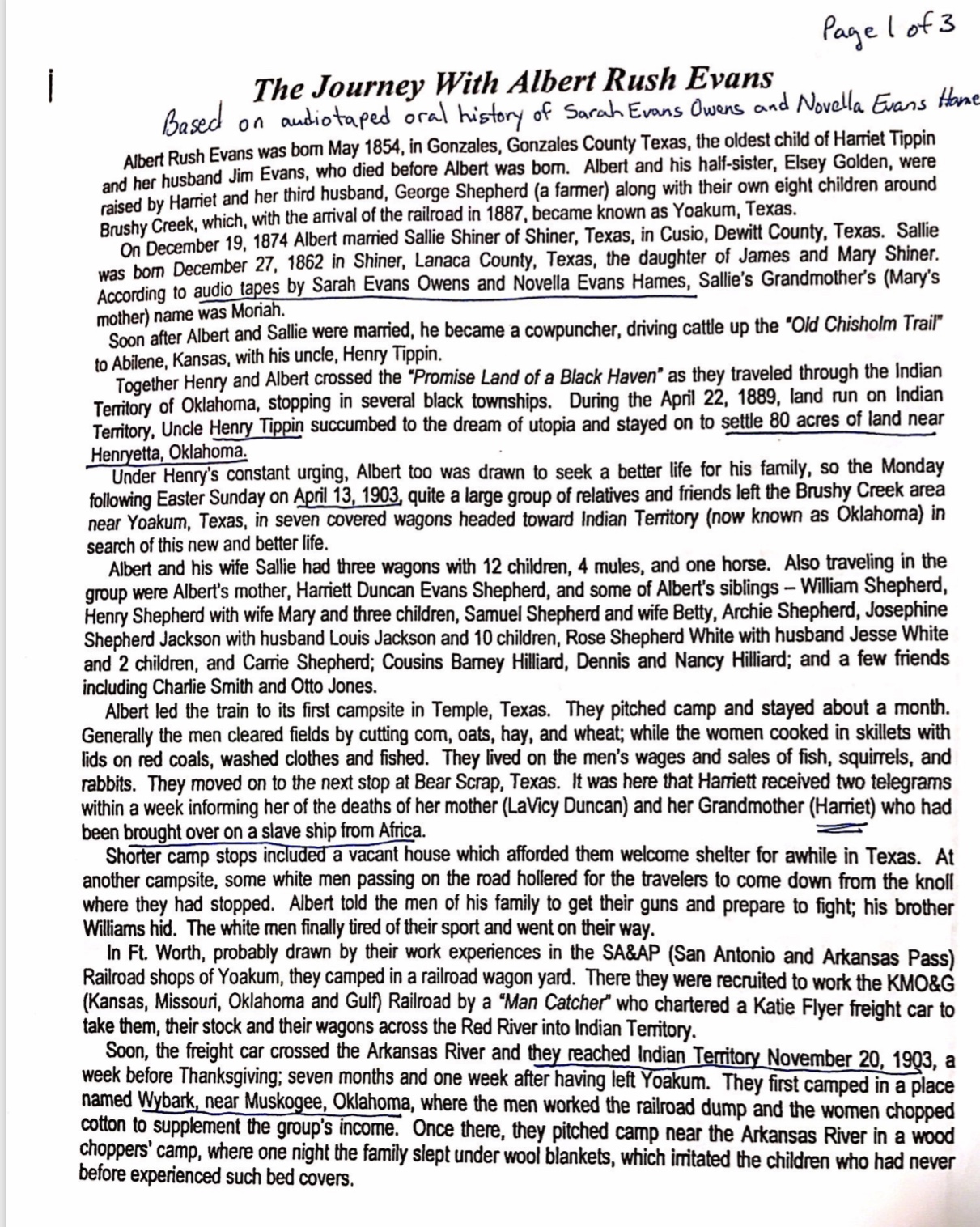
“Harriet’s” descendants and close friends traversed Texas and Indian Territory in 7 covered wagons. Arriving at Uncle Henry Tippins place, they resided in a vacant one-room house originally inhabited by “Ol’ Man Mose Grayson,” a Creek Freedmen [Dawes 1650]. Building five houses and a church, the former slave families created an African American community in Grayson, Oklahoma. This feat was achieved in less than two years of arrival.
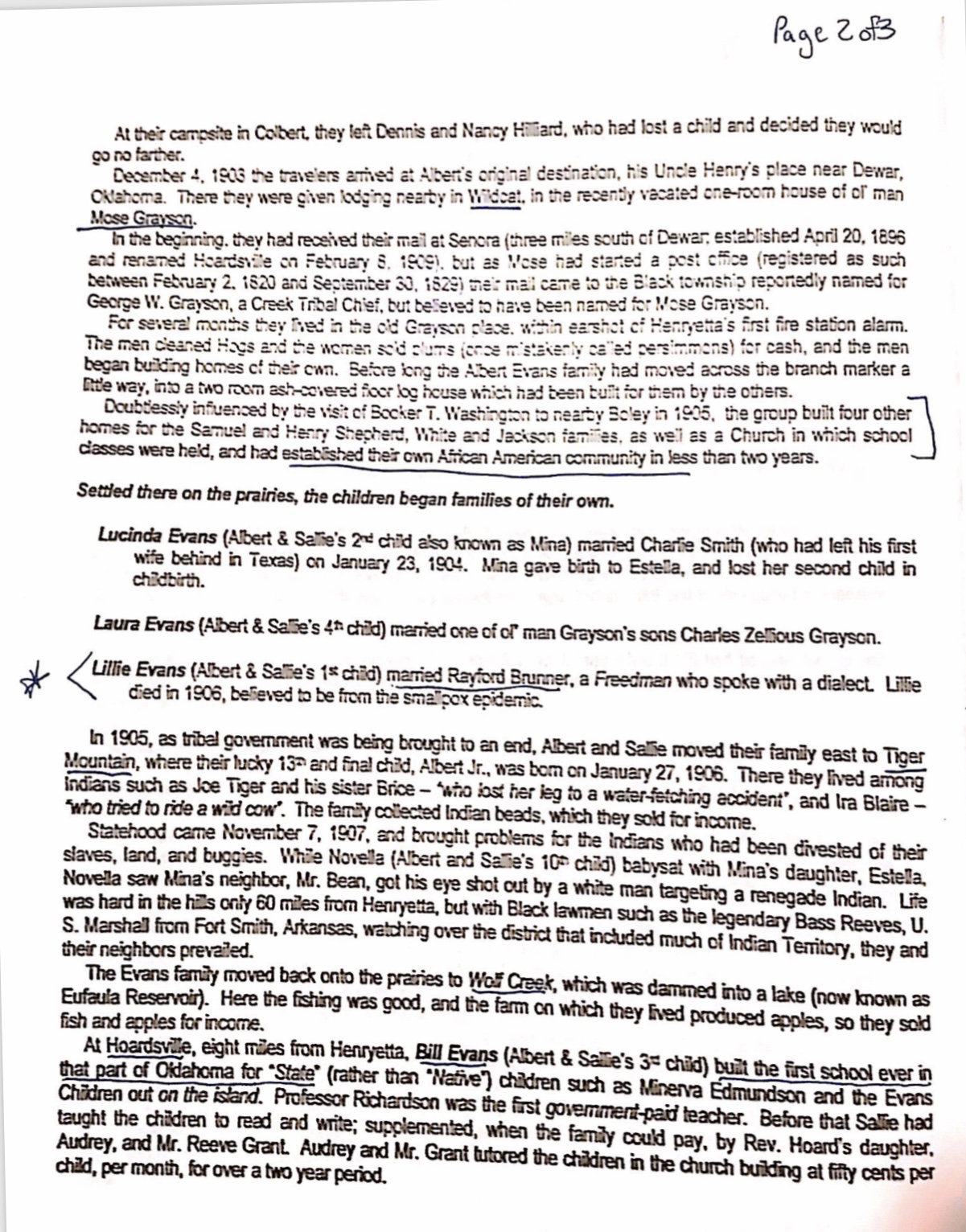
The pioneers were ingenious in their methods of entrepreneurship; cowpunching, catching and selling rabbit, fish, and squirrel, working for the KMO&G railroad and cleaning hogs. They also picked fruit, cut crops and collected indian beads to sale.
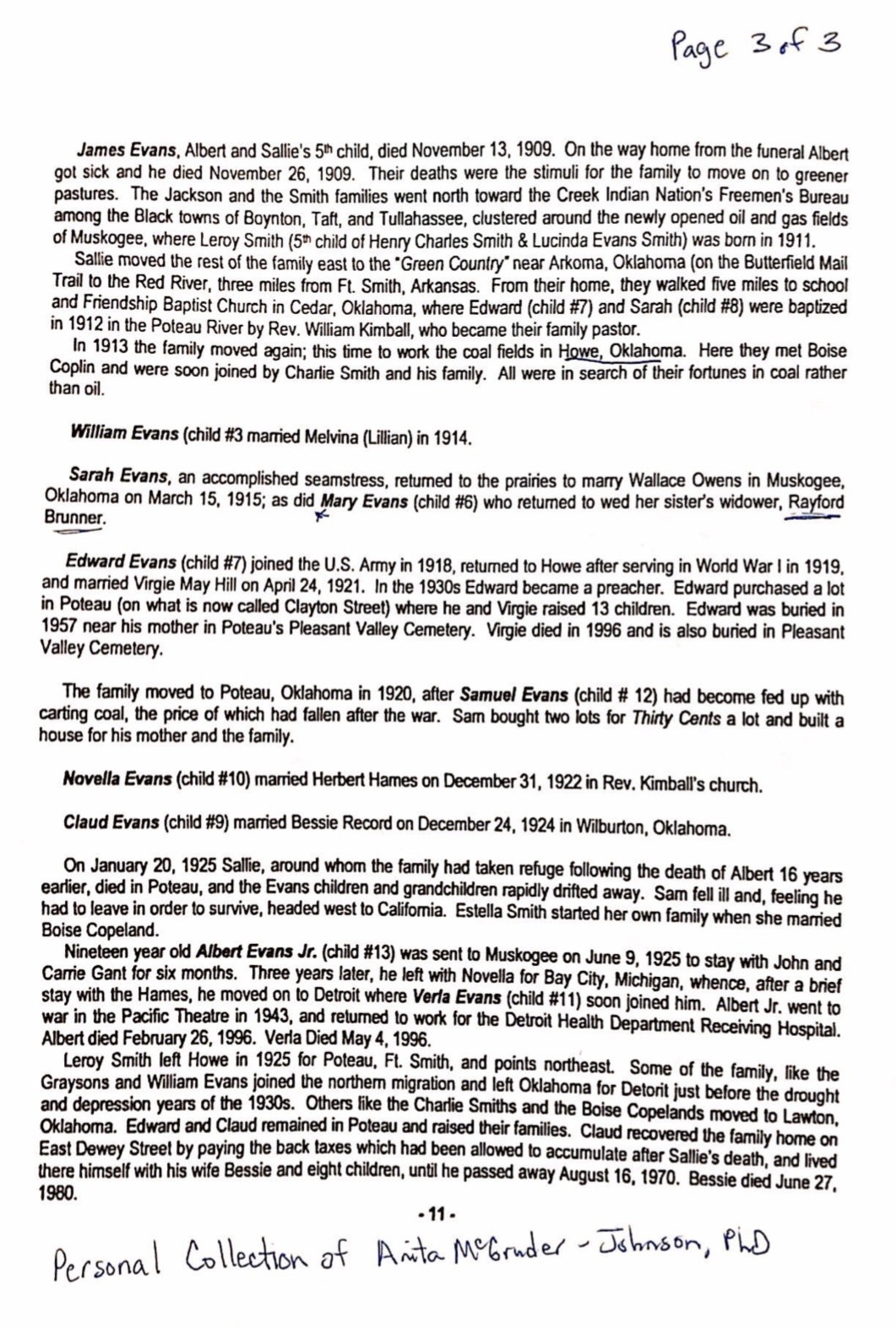
Losses and racial conflicts are described along with marriages and micro-migrations. For example, Lilly Evans married Rayford Bruner, a Creek Freedman [Dawes 3 ] who owned land. Sadly, she died of smallpox within two years of their union. In 1915, her younger sister, Mary Evans, married Rayford Bruner and resided at his home. Members of the wagon train families continued their migration to Tiger Mountain, living “among the Indians such as Joe Tiger and his sister Brice….and Ira Blaire….”
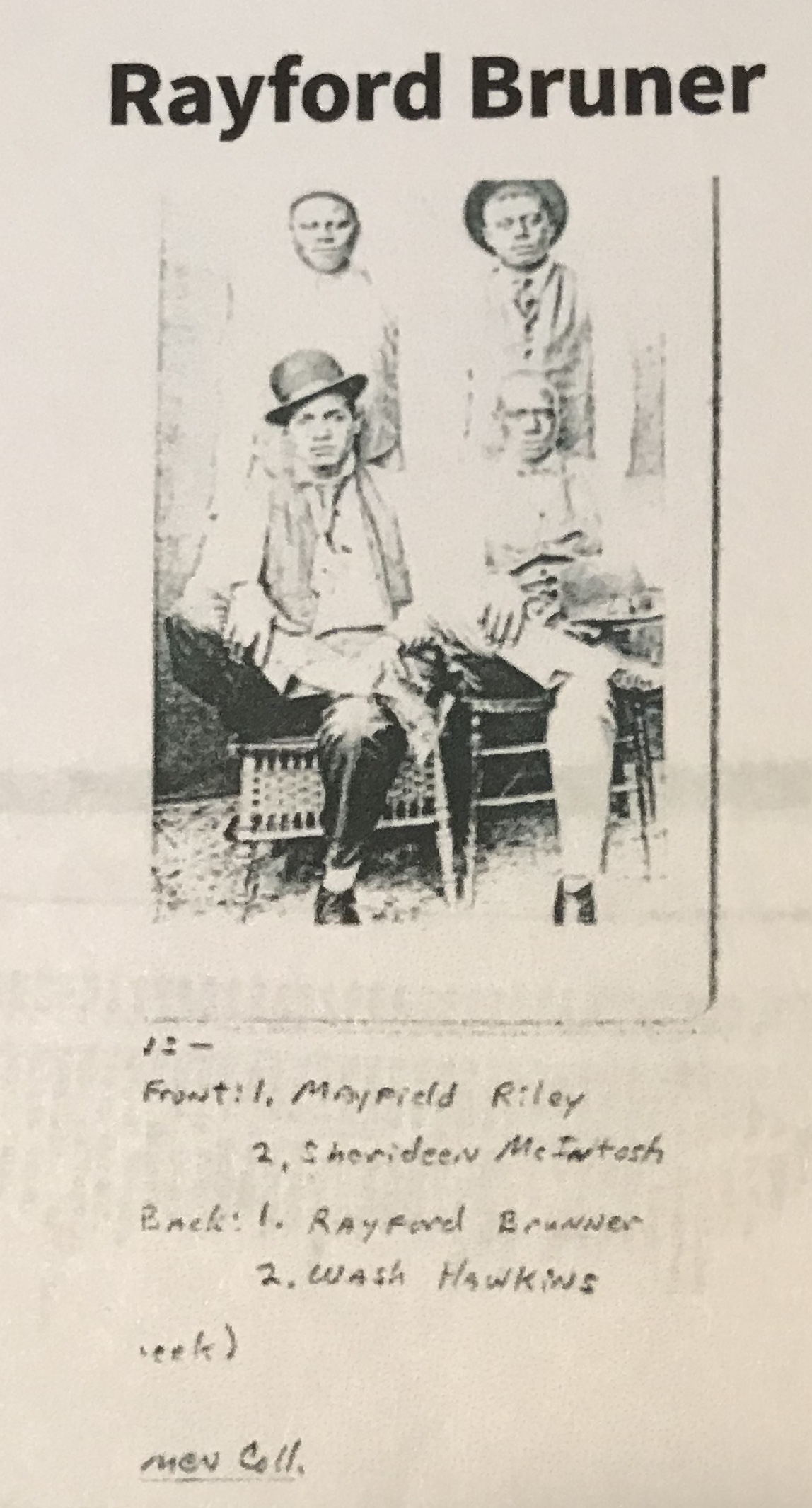 Rayford Bruner— standing back left
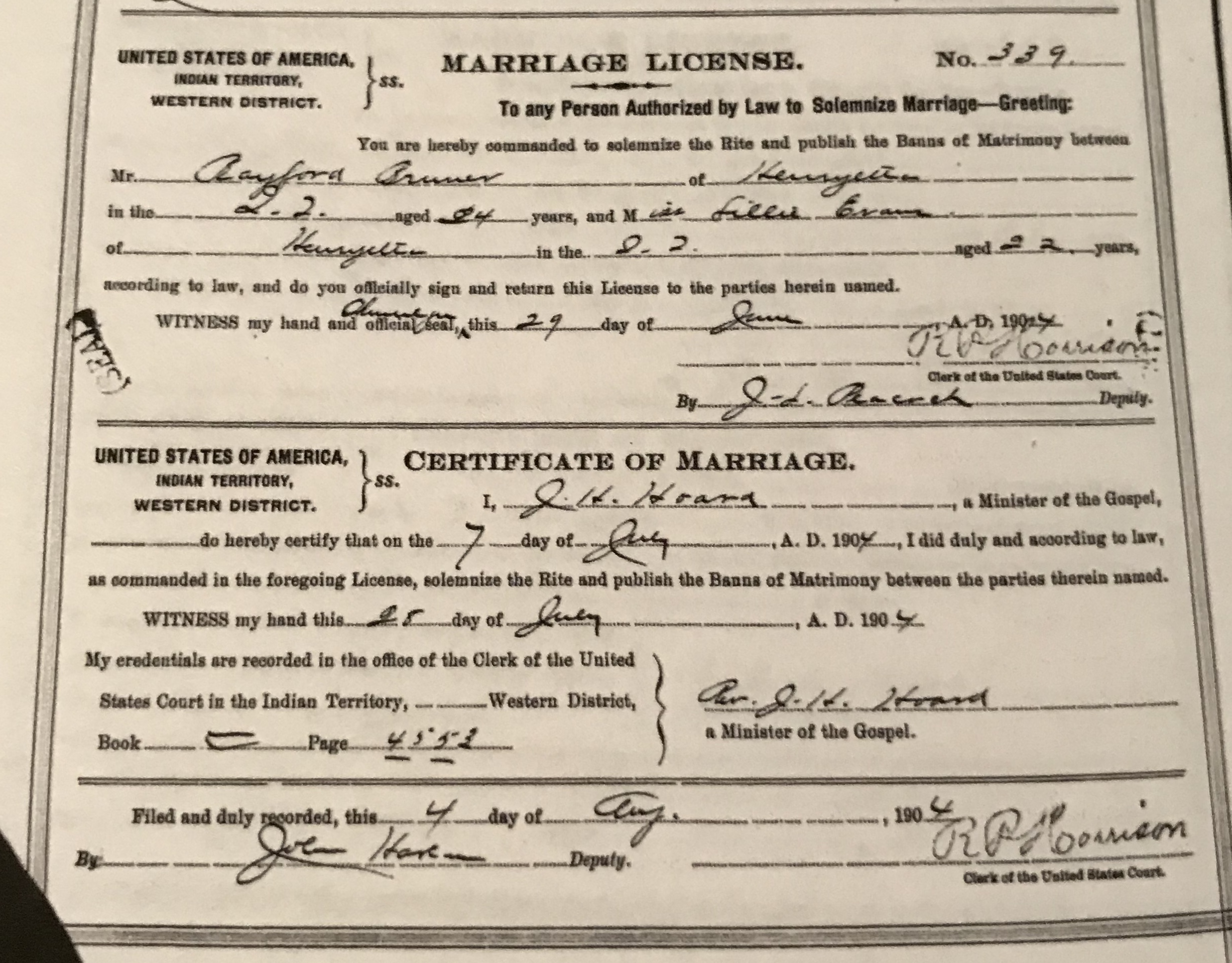 Marriage License 7/1904: Rayford Bruner and Lilly Evans
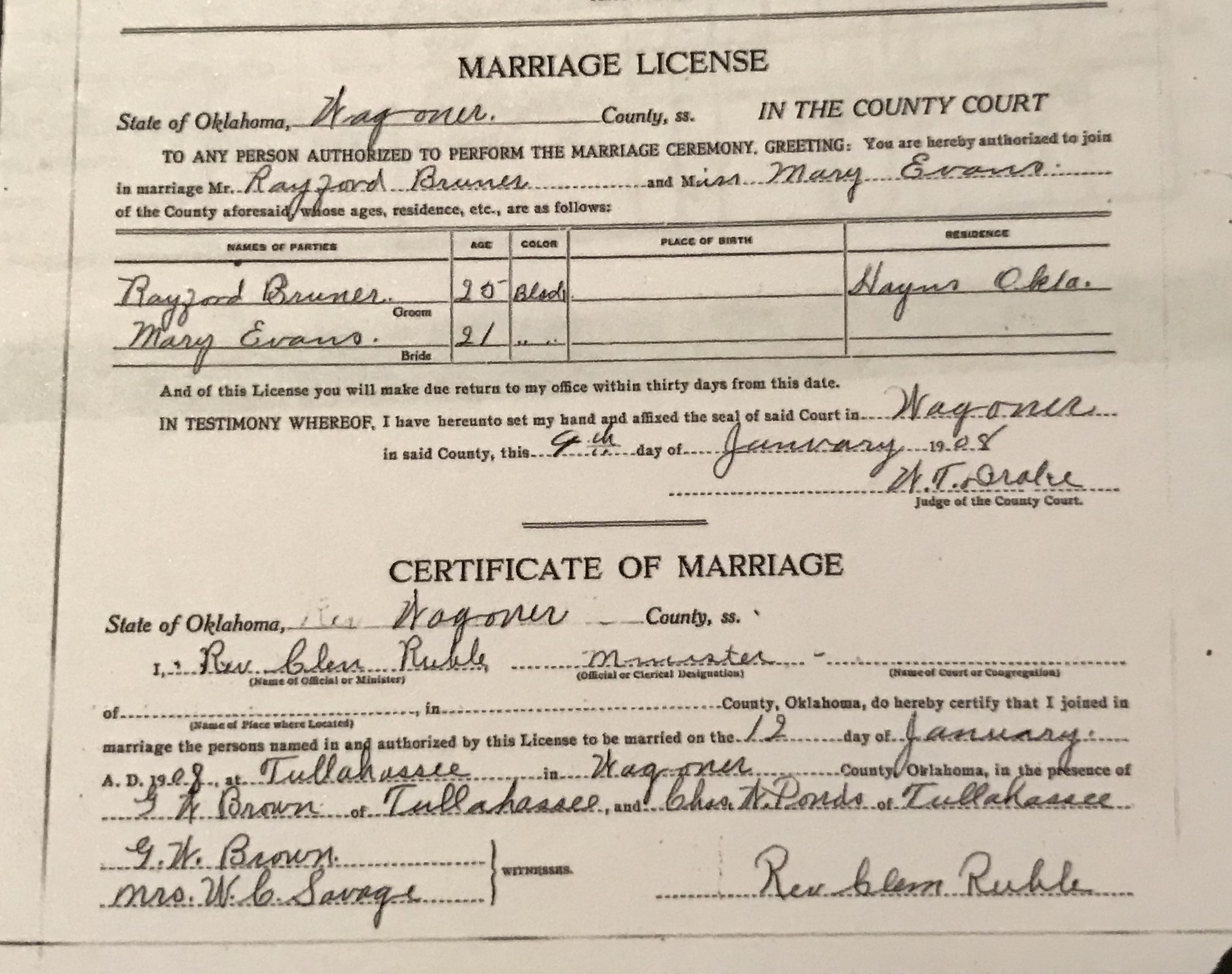 Marriage License 1/1908: Rayford Bruner and Mary Evans
Sallie Shiner Evans (widow of Albert Rush Evans, who died on November 26, 1909) moved family members who had not settled homes to an area 3 miles from Ft. Smith, Arkansas. They attended Friendship Baptist Church in Cedar, Oklahoma. In 1912, Edward and Sarah Evans “…were baptized in the Poteau River by Rev. William Kimball.” Ultimately, in 1913, the family moved to Howe, Oklahoma to work in the coal mines with Boise Copeland, Charlie Smith and his family.
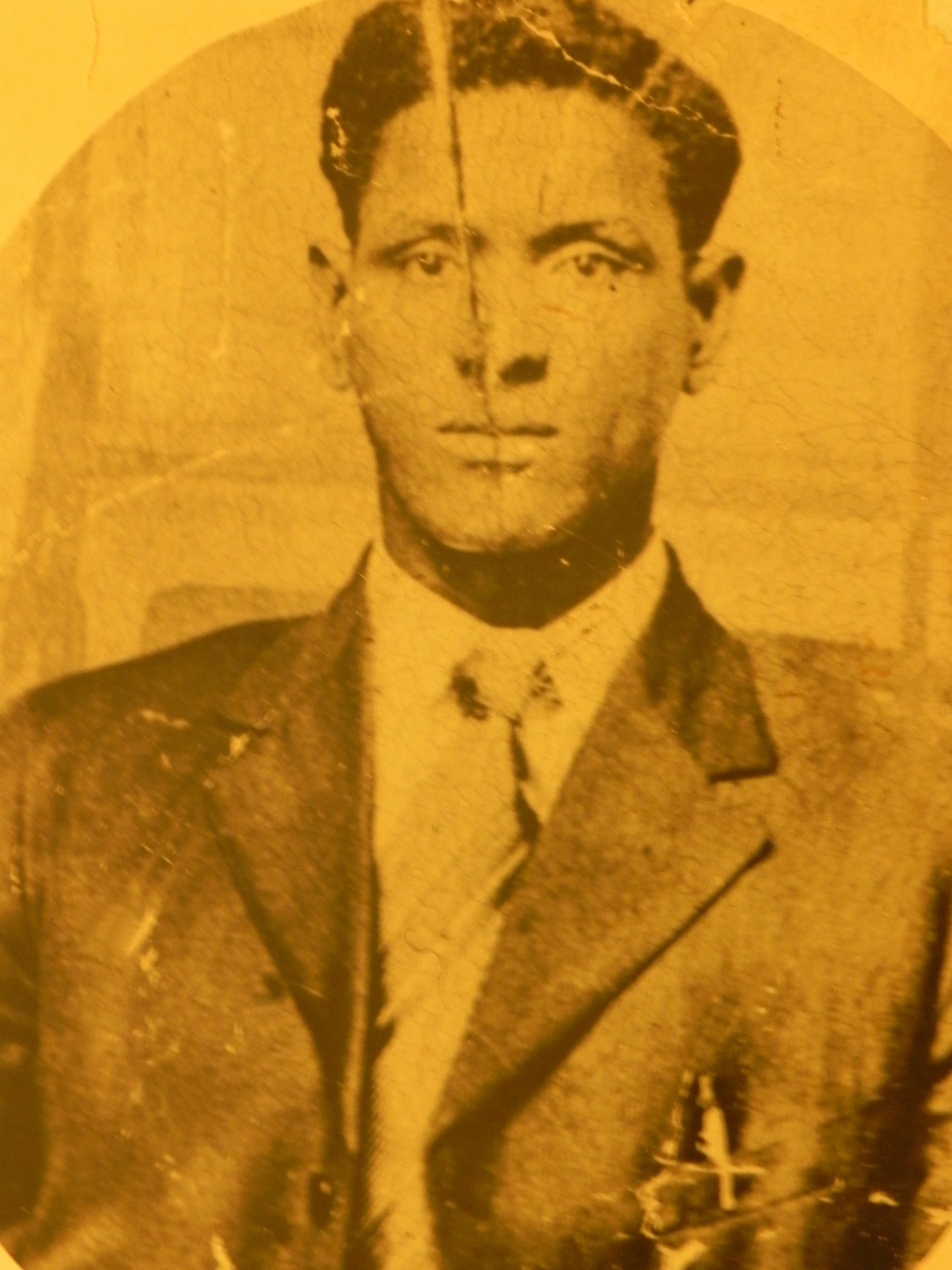
Reverend Edward Evans Served in WWI
In 1918, my grandfather, Edward Evans was drafted into World War I. He then moved to Howe, Oklahoma, married Virgie Mae Hill on April 24, 1921; and they settled in Poteau, Oklahoma where he built a home and sired 15 children. In addition, he became a Baptist Minister. Edward Evans and his eldest son, Alfonso Evans built Mount Calvary Baptist Church next door to the house.
Thanks to the legacies of curiosity, persistence and diligence of Mrs. Vera E. Evans McGruder, Dr. Claude D. Evans and Mrs. Elayne Owens Evans and other family researchers for seeking and preserving our history — particularly the names and contexts of existence. I look forward to continued exploration of the lives of the persons listed in this historical transcription. It is my hope that this document will be useful to other individuals who are interested in Texas and Oklahoma history, the migration of former slaves, Freedmen history and oral-based documentation.
 African-Cherokee American Genealogy Blog
Leave a comment